Estimate vs Proposal vs Quote vs Bid: What’s the Difference?
Understand how estimates, proposals, quotes, and bids work in the field service industry. Learn when to use each to price jobs accurately and stay competitive.
Nov 24, 2025

Share


Before any job begins, customers want a clear picture of what they’re paying for and why. Estimates , proposals, quotes, and bids all help explain that—but each one communicates something different about scope, pricing, and commitment.
If you’re running an HVAC , plumbing , septic , or other service business, knowing exactly when and how to use each document keeps your pricing consistent, speeds up the sales process, and prevents confusion for both your team and your customers.
Understanding Where Each Document Fits in the Pricing Process
Before sending any pricing, it’s important to know what each document is meant to do. An estimate starts the conversation, a quote locks in a specific price, a proposal outlines the full scope, and a bid competes for larger or commercial projects. Knowing the difference helps contractors present their work clearly and manage customer expectations from the start.
To start, let’s look at the first document most contractors create when pricing a job: the estimate.
What Is an Estimate?
An estimate gives a potential client a rough idea of what a specific job will cost. It is an informed approximation based on labor, materials, and other overhead costs. Estimates are not legally binding and can be flexible if the project scope or material prices shift.
Estimates are typically the first step in the pricing process and an essential tool that helps contractors win business by showing customers how a project can proceed within budget.
How to Create a Thorough and Accurate Estimate
- Inspect the job site: Research and take note of conditions that may affect costs.
- List materials and labor: Include labor hours, hourly rates, and equipment costs.
- Account for overhead: Add vehicle expenses, insurance, permits, and administrative time.
- Add a fair profit margin : Ensure coverage for both risk and reward.
- Keep it consistent: Use customizable templates or software to produce consistent estimates.
A robust estimate builds trust and helps customers make informed decisions before the work begins.
What Is a Proposal?
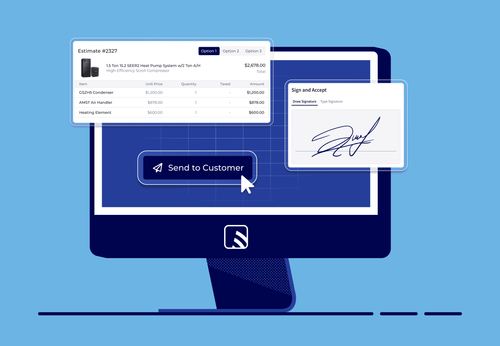
A proposal is a detailed offer that outlines exactly what work will be completed, how it will be performed, and how much it will cost. It is more formal than an estimate and often involves specific terms, scheduling details, and warranties. When signed, a proposal can act as a contract between the contractor and the client.
Proposals usually include a final amount that represents a clear agreement between both parties. They may include multiple options so customers can select the service that best fits their needs. Creating strong proposals requires effort and focus, but they help contractors determine expectations and move projects forward with transparency and confidence.
How to Create an Effective Proposal
- Define the scope of work: Describe the tasks, equipment, and materials in detail.
- Include pricing options: Offer standard and premium choices if appropriate.
- Add a clear timeline: Note the estimated start and completion dates.
- Include payment terms: Specify deposit amounts, milestones, and final payment conditions.
- Present professionally: Use clean formatting and simple language that customers can understand.
A well-written proposal documents every key detail so there are no surprises once the project starts.
What Is a Quote?
A quote provides a specific price for a service or job. It is based on known quantities and costs and is typically valid for a limited period, such as 30 days. Once the client accepts, the quote becomes legally binding. Quotes are common for smaller or routine jobs where the scope is straightforward.
In most cases, quotes set clear expectations and give customers confidence to proceed without delays. Quotes are also a great way to convert a lead into a paying customer when accuracy and clarity matter most.
How to Prepare a Professional Quote
- Be exact: List all materials, labor, and any additional fees.
- Add an expiration date: Protects your business from material cost increases.
- Keep it simple: Make sure the customer clearly understands what is included.
- Document approval: Maintain signed or digital acceptance records for your files.
Quotes help contractors lock in pricing and timelines while ensuring both parties agree on the full scope of work.
What Is a Bid?
A bid is a formal offer submitted during a competitive process, often used for commercial or government contracts. It includes all project costs, qualifications, and required documentation. Once accepted, a bid becomes legally binding and must be fulfilled at the stated price.
How to Create a Strong Bid
- Review the bid documents: Understand every specification and requirement.
- Confirm your numbers: Base all pricing on accurate labor and material costs.
- Include certifications: Attach proof of licensing, insurance, and safety compliance.
- Be realistic: Account for timelines, labor availability, and potential risks.
- Submit on time: Late submissions are typically rejected without review.
The goal of the bidding process is to present the most competitive and complete offer, not simply the lowest price.
Common Mistakes That Affect Project Costs
Now that you understand the widely accepted definitions of estimates, proposals, quotes, and bids, let’s review some common mistakes contractors make during the pricing and bidding process.
- Guessing costs without verifying material or labor rates.
- Leaving out overhead, such as equipment maintenance or administrative hours.
- Underestimating scope changes when customers add work mid-project.
- Rushing proposals that miss critical details.
- Failing to document approvals or signed agreements.
Avoiding these mistakes keeps your pricing accurate and your projects on track. The right tools can make that process even easier, helping you stay organized, meet customer expectations, and stay consistent from estimate to final payment.
Creating Detailed Estimates, Proposals, Quotes, and Bids with FieldPulse
With FieldPulse , contractors can quickly create detailed estimates , proposals , quotes, and bids that set clear expectations and protect the contractor’s profit. And that’s only the beginning. The platform also includes a built-in pricebook, job costing tools, inventory management, and a full CRM to keep every part of your business organized and running smoothly.
See why contractors trust FieldPulse to run their business.